Although certainly not a new album, Jackson C. Frank's self titled album is a fairly recent discovery for me. I have heard his songs for a number of years though, as will many other Nick Drake fans.
Nick Drake, undoubtedly
a fan
Drake recorded some cover versions of Jackson's songs which, in some ways, became more famous than the originals after the Drake family started to hand out copies to fans which and subsequently made their way on to numerous bootleg releases.
There is good reason for Nick Drake to record the covers. You can hear Jackson's influence on all of Drake's album, and they share a very similar style. Jackson, like Nick, was a solo singer/guitarist/song writer with some deep roots in both blues and folk.
The tracks on this album almost seem to be too short even though the are mostly over three minutes long. I think this is because there's something so captivating about his voice, the power and the slight drool quite reminiscent of Tim Buckley.
This has to be one of the most influential albums of the folk genre, even though a lot of people have never heard of him. The production credit going to Paul Simon certainly attests to the standard of the album, not only in production but also in song writing and musicianship.
Ghazal is quite an unusual group. Not only because of the style of music that they play but also because of who the members are. Shujaat Khan is part of a musical dynasty.
His legendary family has produced a line of seven generations of musical geniuses. His father, Vilayat Khan, is one of the most highly regarded sitar players ever, a giant in Hindustani music.
As far as I know, Shujaat is the first member of this family to break away from the confines of ragas to explore other genres of music. This is not the first non-raga music that he has made but it could well be the most impressive.
His partner in this project is Kayhan Kalhor, a Kurdish Iranian musician who plays kamancheh. The kamancheh is a Persian violin-like instrument that is not played like a western violin but rather standing up, rested on the leg of the player.
Kayhan is a virtuoso in his own right and makes an excellent match for the skills of Shujaat Khan. They combine to make a formidable super-group.
The music is quite unusual as well. As I mentioned, this is not raga music such as Shujaat is most widely known for. The band is based on the idea of improvising around a blend of North Indian and Persian classical and folk melodies and traditions. This is the last album that they produced and is all recorded live.
The music is spellbinding from the opening chord of Shujaat's sitar. The two players weave around each other like they were born to play together, echoing one melody and then taking it in turns to expand and improvise around the theme. Shujaat also sings in places, always fairly softly but more than enough to be powerful and prominent at the same time.
Needless to say, the sitar playing is stunning, but as is that of the kamancheh. In fact, the range of sounds that Kayhan draws out of his instrument is amazing. He alternates between plucking and bowing, both techniques producing very different sonic effects.
The three songs on this live album are lengthy, with none of them being less than fifteen minutes long, but these two masters know how to keep the interest up and before you know it the track is over. It is simply mesmerising.
The Ozric Tentacles have been around for years and years. They have only one remaining original member since they formed two decades ago but have released twenty eight albums in that time. They are one of the most prolific and original bands of the past fifty years yet they have never achieved mainstream fame.
You could be forgiven for never having heard of Ozric Tentacles. Although giants at an underground level, they are barely known by the majority of people. That said, they are a legendary band and you will almost have heard an artist or group that have taken inspiration from them.
When I heard that Ozrics were playing in the my city, only a few hours before they were due to walk on stage, I was somewhat surprised. I live about as far away as you can possibly be from their roots in Somerset, England and I didn't expect to ever see them again when I left the UK.
However, they came to play two shows on consecutive nights, both of which were packed to capacity. It turned out that the band are quite famous here. This is mainly due to the virtuoso guitar skills of Ed, the main founder of Ozrics.
I had not realised that they had previously released yet another album so soon after the gig I went out and got it. As with all of their albums, I wasn't disappointed. There are a couple of albums that are not as strong as the others but generally you can buy any Ozric album and rest assured that haven't wasted your money.
I was always fond of the band's line up when they have guy who played flutes and whistles (and occasionally some strange vocals), circa Become The Other, but their sound has become even more refined with the production getting stronger and synths getting more futuristic, if that's possible.
Yum Yum Tree sounds excellent, the quality of the recording and the production is top notch and the songs themselves match. It is perhaps not as hard as their previous couple of albums as there is a definitely chilled out sound to this one.
The formula is the same and all the usual components are present, from Ed's incredible guitar licks and leads, to the floaty pads and arpeggiated synths, and the live drumming pushing the Ozric sound somewhere between and beyond the boundaries of psychedelic progressive rock and dance music. The formula works well and the band obviously enjoy playing it so why change it?
The most recent line-up
There is, of course, lots of world music influences throughout the album. This isn't anything new but somehow it still sounds quite fresh, the textures and clarity in the production making everything as clean and well produced as any modern dance music. One track has a reggae/dub skank and, naturally, it spirals off in to psychedelic and hazy aural madness/loveliness.
Yum Yum Tree doesn't disappoint at all and proves that Ed Wynne and the rest of the band have still got it. If anything I would say they are getting stronger and stronger with experience. They are not veering off in experimental directions as some bands do, they're sticking to what they do best and continuing to do it well, and getting better at it all the time.
I've been a fan of Liquid Stranger for a while. He is quite a mysterious character. hailing from Sweden, he claims to have little interest in listening to music, aside from his own presumably, and that his main influence is the music from early computer games. In his early works you could hear this clearly but his albums managed to cram in styles such as ambient, jazz, dubstep, psychedelica, reggae, dub, and dancehall.
The Private Riot
His previous two albums, The Private Riot and Mechanoid Meltdown, were almost masterclasses in dubstep. They were both powerful, clean and very tightly produced albums that set very high standards for other dubstep producers to follow. However, his two albums previous to these were more of a dub affair and this is the direction that The Arcane Terrain has returned to.
There is a touch of the Liquid Stranger dubstep sound on this though. The production, is incredibly clear and precise, as good dance music should be and all of Liquid Stranger's releases are. It is slightly heavier than the earlier dub albums, undoubtedly a sign of the dubstep influence seeping through.
In fact, this sounds remarkably like a perfect crossover of his dub sound and that of The Private Riot with the driving and dirty basslines swelling and wobbling, and the heavy and tight drum punching through the mix, both fitting perfectly with the psychedelic sounds swirling around in the background.
The Intergalatic Slapstick, of Liquid
Stranger's dub albums
The second track features some deep and dancehall-esque vocals coming in when the elastic bass cuts out. The mix on this track is so spacious and tight, it really shows off Liquid Stranger's style and skills in making an absolutely banging track with multiple influences and polishing it in to one of the most pleasurable listening experiences you can have, like sweet candy for the ears.
The seventh track, Totem, starts off with some kind of Asian sounding flute before the track goes completely bhangra, Liquid Stranger style of course. The female vocals throughout are beautiful, again the incredible production making everything stand out and shine.
The influences continue to come, quite often in Asian flavours, but all the time fitting well with the dub, dubstep and psychedelic framework. Liquid Stranger seems to be heading in the right direction and getting stronger all the time. This album makes me think of artists such as Shpongle, Infected Mushroom, Ott, Hallucinogen (the dub remixes album) and Younger Brother.
I can't recommend this enough, it has some of the finest dub and dubstep I've heard in a long time. I didn't think Liquid Stranger could top The Private Riot but I think he has done it with The Arcane Terrain . A true masterpiece and a modern classic in my opinion.
Mexican producer Murcof produces ambient electronic music that is rich in textures and imagery. This is his sixth album and is a little bit more spacial and ambient than his usual offerings.
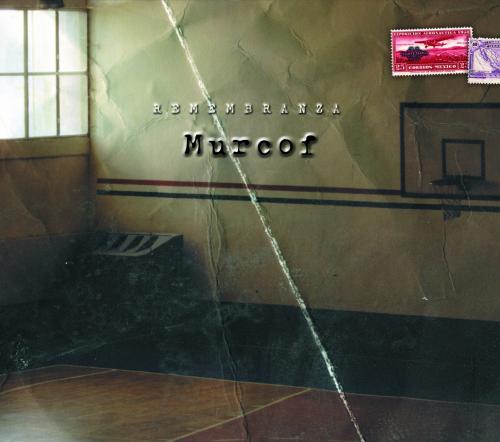
The last album I heard from him was Remembranza, which was excellent, full of glitchy, orchestral and almost dubstep pieces, many of which went on for seven or eight minutes.
This album has a very similar sound except without the glitchy dubstepness. The album is made of twenty tracks, generally only a minute or two long. There are more textural sounds and more of a focus on the ambient element, the result being a rather well put together, thought out album with a continuous theme running through each track.
The third album, Remembranza
There are multiple versions of the same movements but this doesn't get as repetitive or boring as you might expect. The flow and pace is kept by the tracks being mixed in with each other and the samples and textures constantly evolving to keep it fresh. Murcof explores the sonic soundscapes of each mini theme within the grander idea, and does it successfully.
The general sound of the album is quite dark and perhaps depressing, but strangely, also uplifting at the same time. The orchestral samples work as well as ever with the electronic parts that float in and out, stabbing here and there, the difference in origin and tone between the two somehow being blurred in to a coherent whole, densely packed with flavours and colours.
As far as ambient albums go this is really quite good. The tracks might be too short for some, which is understandable, it's not unusual for song lengths in this genre to be in the ten to fifteen minute region. Having said that I think most fans of ambient and electronica in general could like it when given a chance in the right setting and time.
After a slight technical hitch I've managed to get the blog back to normal so go ahead and read my latest review of the Venetian Snares EP, Cubist Reggae
I can't say I'm a huge fan of Venetian Snares, I've heard couple of albums but a lot of it is a bit too intense for me. Reggae is the last thing you (or I at least) would expect them to do. But sure enough, they have made some reggae. Well, of a sort.
I doubt very much that many die hard reggae fans would even call it reggae as it is actually more like electro dub than anything else. I suppose it is exactly what you would expect if Venetian Snares listened to a lot of dub and used it as an influence.
It is not even straightforward electro dub. The first track is the only one that really resembles reggae but it is like some futuristic computer-gone-crazy kind of reggae. There are loads of edits and glitches, and only a very vague melodic theme weaved through the track, but also a definite skank and lovely bassline.
There is also a strange and slightly creepy pitched down vocal line, not singing but talking. Towards the end you hear some massive reverbs, typical in dub, and some echoes which remind you that this is some kind of an attempt at dub. I can't imagine how long it took to make this, it sounds like it was started with a regular electro reggae track and then remixed and edited for hours and hours.
The second track is the one that resembles dub the most. It starts with an almost conventional skank and upbeat but quickly descends into glitchy edits again, although this is done with focus and doesn't sound completely out of place or unnecessary. The echoes and reverbs are there but there is also a very dark sound or theme that comes in halfway through the track in a luscious pad breakdown . The track fades out to leave this pad but comes back in again with a vengeance, taking the hyper-editing even further, which actually adds quite a lot of pace and even drama to the track.
The other two tracks on Cubist Reggae go back to a more typical Venetian Snares style with less of the dub and reggae influence, although it is still there, just much less so. I don't listen to a lot of this type of music so I don't have much to compare it to but the last track reminds me of Aphex Twin a lot with the unbelievable hyper-editing and the dark yet beautiful melodies floating behind a foreground of madness.
For me, this is the best music that I have heard from Venetian Snares. As you would expect, it is highly original, genre jumping, intense, and incredibly unusual. If you're a fan of electronic dance music and/or dub then you should check this out.





 The tracks on this album almost seem to be too short even though the are mostly over three minutes long. I think this is because there's something so captivating about his voice, the power and the slight drool quite reminiscent of Tim Buckley.